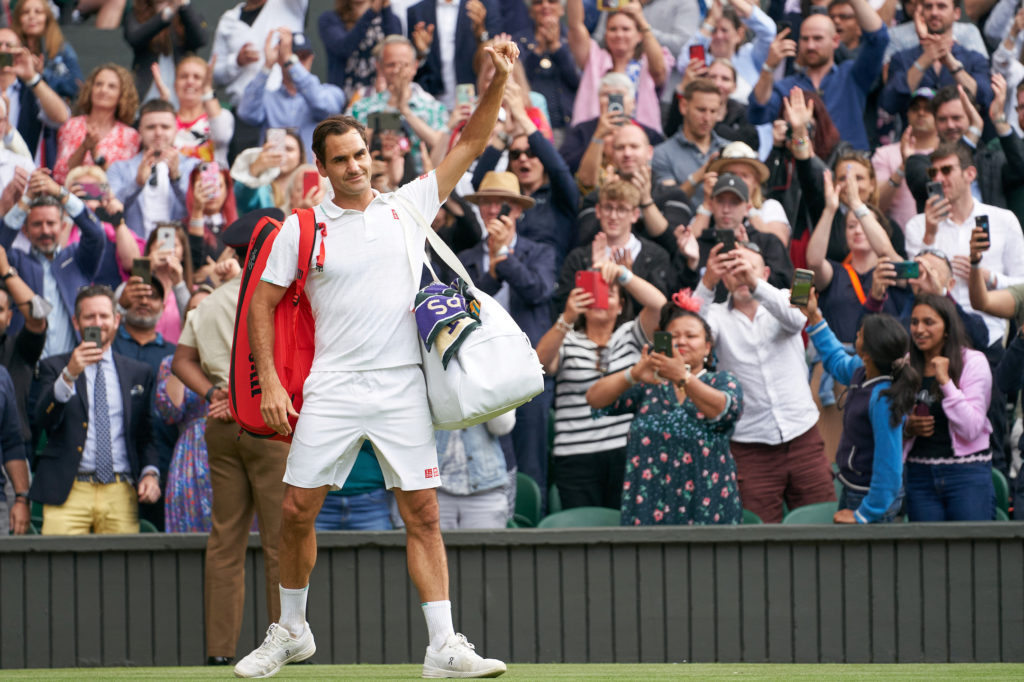
Patrick McEnroe:
Well, I think what happened in the early 2000s is that the game started to get way more powerful. And you started to see big servers, and then players sort of bludgeoning the ball.
And then Roger Federer came along, and he was a little bit of a throwback. In other words, he was a classic player with, as you said, a one-handed backhand. He played with slice. He played with finesse. He played with grace. He could come to the net. He could hit drop shots. But, yes, he could also play the power game.
So he took the classical game, and he brought it into the modern era of tennis. And he forced the other players, most notably Rafael Nadal and Novak Djokovic, to continue to improve their games to keep up with him, to catch up to him and eventually, in the case of those two, to pass him, at least in terms of total Grand Slam wins.
So I think, in that way, he left a mark with the way he played the game and pushed the envelope for the rest of the field. But, again, to me, it was his ability to show that you could be a great champion, but also do it with dignity, grace, sportsmanship, cry when you lost, cry when you win, show your emotions out on the court.
And when you saw Carlos Alcaraz and Jannik Sinner play just a spellbinding match at the U.S. Open, I was thinking to myself, we can thank Roger Federer for this, because he raised the bar in a big way.
ncG1vNJzZmivp6x7sa7SZ6arn1%2Bjsri%2Fx6isq2ejnby4e9Oepaeho2K0s7HArWSrp5eav26yxJ2cq52iYq6vus6upZydo2K%2FpsDIq5ymnZ6peqKy056pZqGcocK0wNGipq6rXZius7HEqw%3D%3D